Soccer Manager 2026 - Football
- 4.4
- Rating
- 10.00M
- Installs
- Free
- Price

 Analysis by App-foxy
Managing a football club sounds simple until every decision starts affecting the next one. In Soccer Manager 2026, I found that the real appeal is not merely choosing a formation and watching a match unfold. It is the responsibility of building a plan, committing to it, and then dealing with the consequences when the team does not behave as expected. That makes this a more thoughtful sports game than a quick match simulator, especially for players who enjoy the decisions around football as much as the action itself.
Developed by Invincibles Studio Ltd, this free sports game puts me in the role of a club manager. The store summary presents it as a way to manage elite football clubs and lead a dream team, but my experience is more interesting when I treat it as a long-term decision game rather than a collection of isolated matches. The important question is not simply whether I can win the next fixture. It is whether the choices I make now give the squad a sensible chance of coping with the matches that follow.
The game is available for Everyone and has attracted a 4.3 average from around 130 thousand ratings, alongside more than 10 million installs. Those figures suggest a broad audience, and I can understand why: the basic idea is easy to recognize, while the managerial layer gives experienced football-game players room to think more deeply. It is free to start, although optional purchases range from $1.49 to $119.00 per item, so I would approach it with a clear idea of what I want from the game before spending anything.
You May Also Like

 Google Keep - Notes and lists
Google Keep’s Quiet Growth Shows the Appeal of Simpler Notes
As mobile work gets busier, Google Keep keeps winning a simple contest: capture a thought quickly, find it later, and get on with the day.

 Blood Strike: 2.5 Anniversary
Blood Strike’s Loadouts Turn Every Drop Into a Tactical Gamble
A close look at Blood Strike’s custom loadouts: how fast access to signature weapons reshapes its battle royale rhythm, rewards preparation, and narrows the gap between fights.

 Pandora - Music & Podcasts
Pandora’s Music Is Easy to Start, but Harder to Recover
Pandora’s strength is its low-effort path from a seed to a station. Its weak spot is how much confidence it asks you to place in connection, setup, and quiet recovery.

 8 Ball Pool
 Is Built on Rivalries, Rematches, and Routine
A close look at the rivalries, rematches, shared routines, and unanswered safety questions that turn a quick pool match into a persistent mobile community.

 Samsung Music
’s Quiet Strength Is Playing What You Already Own
Its reach comes less from spectacle than from dependable access to a personal library. That simplicity is both the app’s strongest retention engine and its ceiling.

 AccuWeather: Weather Radar
AccuWeather Review: A Quick, Clear Forecast for Everyday Decisions
For everyday plans, the best forecast is the one you can understand quickly. AccuWeather makes rain timing, radar, and local conditions easy to act on, with a few trade-offs.
More From Our News Desk



Why squad planning is the heart of the experience
I like squad planning most when I treat it as a question of priorities, not a hunt for the strongest-looking lineup. Deciding which weakness matters now—and which one I can live with—gives each change a purpose and makes the next result easier to learn from. That way of thinking also helps explain why progress in the game can feel gradual rather than automatic.
The capability that changes how I play
The strongest part of Soccer Manager 2026 is its focus on running a club over time. A single match is only one piece of the experience. I have to think about the shape of the team, the players I trust, the approach I want to take, and whether the squad is suited to the kind of football I am asking it to play. That turns each fixture into a test of preparation rather than a standalone challenge.
This matters because it changes my relationship with failure. In a faster arcade-style football game, losing can feel like a problem with timing or controls. Here, a poor result can make me reconsider the plan behind the team. Perhaps I expected too much from a certain area of the squad, used an unsuitable approach, or failed to give myself a practical alternative when the match became difficult. The game is most satisfying when I use a defeat as information instead of immediately changing everything.
I also like that the manager role creates a different kind of involvement from a traditional football game. I am not spending every minute trying to beat an opponent directly with reflexes. Instead, I am making choices before and during the match, then watching to see whether the team can turn those choices into a result. That makes it a good fit for someone who enjoys football analysis, planning and gradual improvement.
The key strength is the connection between preparation and consequence. A decision feels worthwhile when it affects how I view the next fixture. Even small adjustments can become meaningful if they are part of a consistent plan. I do not need to chase a perfect result every time; I need to understand what the team is capable of and manage it accordingly.
How I approach a new club
When I begin working with a team, I resist the temptation to make dramatic changes immediately. My first step is to look at the squad as it is and identify the most obvious imbalance. If the team has plenty of attacking options but lacks dependable cover elsewhere, buying or selecting another forward may make the squad look exciting without solving its real weakness. In this game, I get more value from asking what the team can reliably do than from trying to imitate a famous club’s style.
I then choose a basic identity that the squad can support. A complicated plan may sound attractive, but it becomes frustrating if the players are not suited to it. I prefer starting with a straightforward structure, observing where the team struggles, and changing one important element at a time. This gives me a better chance of understanding whether the problem came from the shape, the personnel or the way I approached the match.
That gradual method is one of my most useful tips for new players. Changing several parts of the team after every poor result creates noise. You may win, but you will not know why. Keeping most of the setup stable for a while makes the game feel less random because you can connect a tactical change with what happens on the pitch.
What match preparation feels like in practice
My match routine is deliberately simple. I consider the opponent, check whether my preferred approach makes sense, and make sure the starting group is not built only around the most recognizable names. A strong player is not automatically the correct choice if the rest of the lineup needs balance. I also keep a fallback idea in mind, because a plan that works at the start of a match may need to change when the game develops differently.
This is where the title differs from a basic football manager toy. The preparation is not just a menu to click through before reaching the exciting part. It is the part that gives the match meaning. If I choose a cautious approach against a stronger opponent, I am accepting that the game may be less spectacular in exchange for a better chance of staying competitive. If I push for more attacking ambition, I am also accepting the risks that come with it.
I found it helpful to judge a decision by its purpose rather than by the immediate score. A plan can be defensible even when it does not produce a win, particularly if it exposes a weakness I can address later. Conversely, a fortunate victory can hide poor preparation. This mindset prevents the game from becoming a constant search for a magic setup.
A realistic evening with the game
Imagine I have a short break after work and want to make progress without committing to a long gaming session. I can open the game, review the next fixture, adjust the squad and make a few deliberate choices before seeing how the match develops. I do not need the same kind of rapid input demanded by a conventional football action game, so it works well when I want something involving but not exhausting.
On another evening, I might have more time and review the result carefully. Instead of blaming the outcome on bad luck, I can ask whether my lineup had enough balance, whether my plan suited the opposition and whether I reacted too quickly when the match changed. That makes the game useful for two different moods: a short managerial check-in or a longer session spent refining a club’s direction.
The important limitation is that this is not the ideal choice if I want immediate, hands-on football. I cannot recommend it to someone whose main pleasure comes from controlling every pass, dribble and shot. The satisfaction here comes from making decisions and seeing their effects, not from personally performing every moment of the match.
Three habits that make the management layer better
First, I avoid rebuilding the club around one impressive player. A squad is easier to manage when the overall structure makes sense, and over-relying on one area can leave the team predictable. I would rather have a dependable plan with sensible alternatives than a glamorous lineup that collapses when the preferred option is unavailable or ineffective.
Second, I keep a short mental record of recurring problems. If the same type of weakness appears across several fixtures, that is more useful than reacting to one dramatic result. This helps me separate a genuine squad issue from an isolated bad performance. It also makes transfers and lineup changes feel purposeful instead of impulsive.
Third, I use the game as a test of priorities. If I want attractive attacking football, I need to accept that the team may be less secure. If I want consistency, I may need to choose a less adventurous approach. There is no point selecting a style because it sounds impressive if I am unwilling to accept its costs. The best setup is the one that matches both the squad and my patience.
The best scenario for playing
Soccer Manager 2026 is at its best when I want a football game that rewards thought without requiring me to master action controls. It suits a commute, a quiet evening or a short break when I want to make meaningful decisions in small stages. The manager perspective also makes it easier to return after a pause because the central question remains clear: what does this club need next?
It is especially enjoyable for players who like building a story around a team. A difficult start, a tactical adjustment and a later improvement feel connected. The game gives me reasons to care about the direction of the club rather than only the result of one match. That long-view quality is the main reason I would recommend it to a friend who enjoys football strategy.
For a newcomer, I would start with modest expectations. Do not assume that choosing the biggest names or the most aggressive plan will solve every problem. Spend time learning what the team can do consistently. Once that foundation feels comfortable, experimentation becomes more rewarding because you understand what you are changing.
The trade-offs behind the free-to-play model
The free entry point is convenient, particularly for someone who wants to test the managerial style before committing to it. I can discover whether I enjoy the planning loop without paying upfront. At the same time, the presence of in-app purchases means I would keep an eye on my spending habits. The listed purchase range reaches from $1.49 to $119.00 per item, which is a wide enough spread that cautious players should decide their personal limit before getting invested.
That does not make the game unsuitable, but it changes how I recommend approaching it. I would treat purchases as optional support rather than part of the basic reason to play. If progress ever starts to feel like it is pushing me toward spending, I would pause and ask whether I am still enjoying the management decisions themselves. A good football manager game should remain interesting because of the choices, not because I feel pressured to accelerate them.
Another trade-off is the slower rhythm. The same deliberate pace that makes the game satisfying for planners may frustrate players who want constant action. Some matches can feel like a test of patience, particularly when I already know the decision I want to make and would rather reach the result quickly. That is an unavoidable part of choosing a management game over a direct football simulator.
There is also a learning curve in understanding what deserves attention. New players may initially focus on visible changes while overlooking the broader relationship between squad balance, tactical identity and match context. I found the experience much better once I stopped searching for one universal solution. The game rewards observation, and that can take time.
How it compares with familiar alternatives
Compared with an arcade football game, this title offers less direct control and more responsibility before the action. If I want to score goals myself, an action-focused alternative will be more satisfying. If I want to decide how a club should operate and then evaluate the outcome, Soccer Manager 2026 is the better match for my interests.
Compared with a very deep desktop-style management simulation, it feels more approachable as a mobile experience. I can engage with the central managerial idea without needing to treat every session like a spreadsheet project. The compromise is that players seeking the most exhaustive level of football administration may eventually want something more specialized. This game works best in the middle: more thoughtful than a casual football game, but easier to pick up than an extremely demanding simulator.
That middle position is valuable. It gives me enough room to plan, adapt and develop a club while keeping the experience suitable for a phone or tablet. I would not describe it as a replacement for every other football game. Instead, I see it as the right option for a player whose favorite part of football is deciding what should happen next.
Who gains the most from the manager role
The biggest beneficiaries are patient football fans, fantasy squad builders and players who enjoy comparing choices rather than simply chasing quick wins. Someone who likes discussing formations, questioning substitutions or imagining how a club could improve will probably find a lot to enjoy. The game also suits people who prefer progress that comes from understanding a system rather than improving reflexes.
It is less suitable for players who dislike menus, planning or delayed rewards. If you want a game that feels exciting from the first second, the managerial structure may seem too restrained. I would also suggest skipping it if you have no interest in football beyond controlling the ball directly. The theme is not decoration; it determines almost everything about the experience.
Device compatibility is reasonably accessible, with the game supporting Android versions from 7.0 onward. The current version is 3.6.2, so I would still keep the app updated through the normal store process to use the current release available for a compatible device. Since it is rated Everyone, it is also an approachable choice for a broad range of football fans, although younger players may still benefit from guidance around optional spending.
My recommendation after settling into the system
After spending time with it, I recommend Soccer Manager 2026 to anyone who wants to manage a football club rather than personally play every kick. Its best feature is not a flashy promise; it is the way squad planning gives each match a reason. I can build an approach, test it, notice a weakness and make a measured correction. That loop is simple to explain but surprisingly absorbing when the decisions begin to connect.
I would download it for free and give it a fair trial, especially if I were already choosing between a direct football game and a management-focused alternative. I would start slowly, avoid changing everything after one defeat and decide in advance whether I want to make any optional purchases. With that approach, the game has a good chance of becoming a thoughtful daily football habit rather than another app I open only to chase instant rewards.
Soccer Manager 2026 is not the right choice for everyone, and that honesty is part of its appeal. It asks for patience, accepts that preparation can matter more than spectacle, and makes me live with the consequences of my football decisions. For the right player, that is exactly what turns a free sports game into a genuinely engaging club-management experience.
FAQs for Soccer Manager 2026 - Football
01What platforms is Soccer Manager 2026 available on?
Soccer Manager 2026 is available for both Android and iOS devices. You can download it from the Google Play Store or the Apple App Store. Ensure your device meets the minimum system requirements to enjoy a smooth gaming experience.
02Is Soccer Manager 2026 free to play?
Yes, Soccer Manager 2026 is free to download and play. However, it includes optional in-app purchases that can enhance your gameplay experience. These purchases are not necessary to enjoy the core features of the game but can provide additional benefits and customization options.
03What are the main features of Soccer Manager 2026?
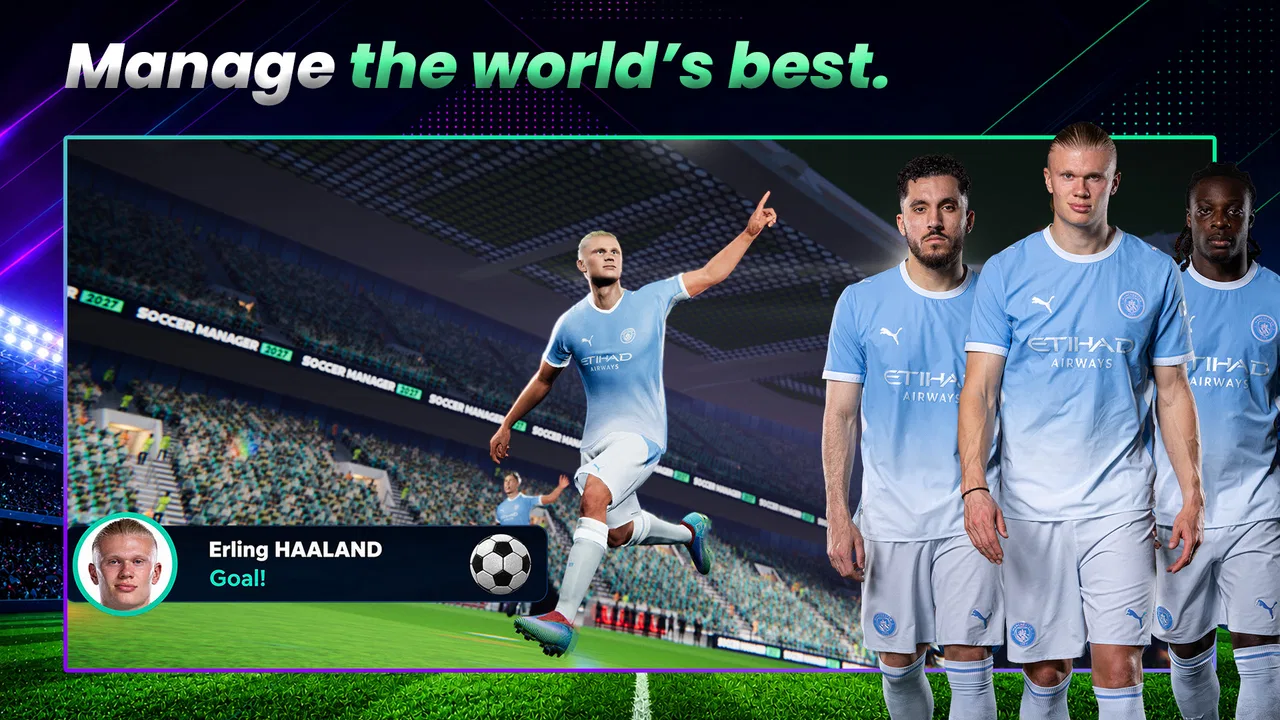
Soccer Manager 2026 offers a comprehensive management experience, including team building, tactical planning, and real-time match simulations. You can manage clubs across various leagues, scout for players, and develop your stadium. The game also includes a detailed financial system to manage your club's budget effectively.
04Does Soccer Manager 2026 require an internet connection?
Soccer Manager 2026 requires an internet connection for certain features, such as multiplayer modes, live updates, and syncing your progress across devices. However, some single-player aspects of the game can be enjoyed offline, although full functionality is best experienced online.
05Are there any age restrictions for playing Soccer Manager 2026?
Soccer Manager 2026 is rated for players aged 4 and up, making it suitable for a wide audience. Despite its simple rating, the game involves strategic thinking and financial management, which might be more engaging for older children and adults.
Pros
- Intuitive interface for easy navigation.
- Extensive player database and stats.
- Realistic match simulations.
- Customizable team strategies.
- Regular updates and events.
Cons
- In-app purchases can be pricey.
- Occasional lag during matches.
- Requires stable internet connection.
- Limited offline features.
- High battery consumption.

Soccer Manager 2026 - Football
Gallery